DTF or referral.
We do not run traditional screen-print orders below 25 pieces. For a small full-color order, DTF is usually the first option we evaluate. If traditional screen printing is specifically required, we can refer the job.
See DTF →
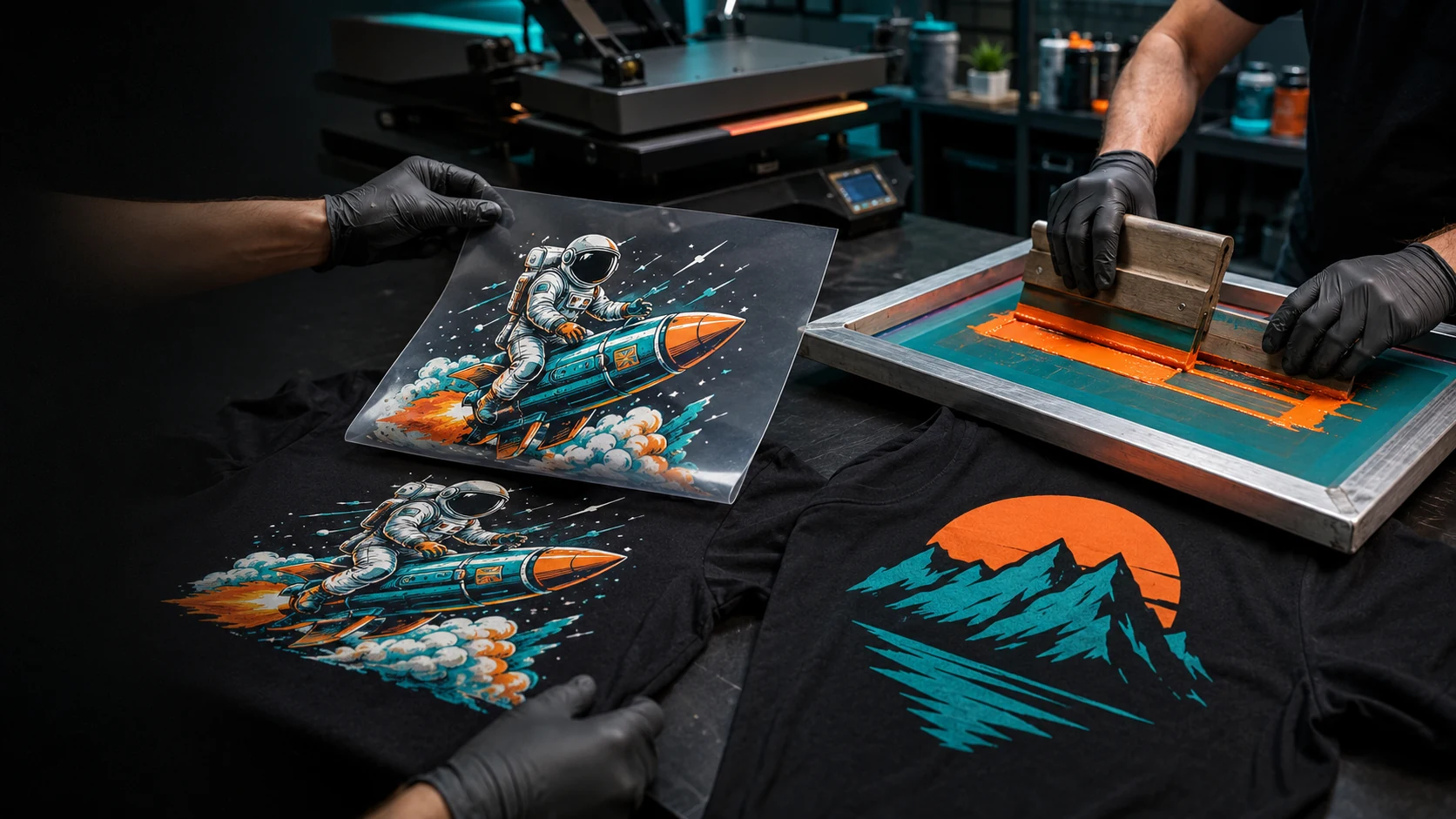
We build the artwork, prep the production files and choose the print method around the actual job—not around one machine. Traditional screen printing starts at 25 pieces. At 50+, the economics usually get much better.
Quantity matters, but so do ink colors, design detail, garment type, placement and deadline. Use this as a fast starting point; final production is quoted after we inspect the artwork.
We do not run traditional screen-print orders below 25 pieces. For a small full-color order, DTF is usually the first option we evaluate. If traditional screen printing is specifically required, we can refer the job.
See DTF →This is our entry tier for screen printing. Simple 1–2 color art is the strongest fit. Complex multi-color art may still be more cost-effective as DTF once screens, setup and labor are considered.
Screen-print details →Setup costs are spread over more garments, so this is where traditional screen printing starts becoming much more attractive—especially for repeat logos, school shirts and company apparel.
See cost factors →Large repeat runs usually create the strongest unit economics. We can plan garments, print locations, separations, underbases and reorders around a production-first workflow.
Request volume quote →Screen printing pushes ink through a prepared mesh stencil. Each production color normally requires its own screen, which is why quantity and color count directly affect cost.
DTF prints artwork to transfer film, applies adhesive powder and heat-transfers the finished image to the garment. That makes detailed, multi-color graphics practical when screen setup would be excessive.
A pretty design file is not automatically a printable screen-print file. We separate artwork into production channels, plan underbases and halftones, and organize files so the printer knows what each screen is supposed to do.
One channel for each solid ink color. Best for logos, text, mascots and clean illustrated graphics.
Typical: 1–6 colorsCyan, magenta, yellow and black halftones combine visually to reproduce full-color art, usually on light garments.
Typical: 4 process colorsCustom spot inks and halftones recreate photographic or highly detailed art—especially on dark garments.
Typical: 6–10 colorsSquare-dot patterns use a controlled palette without traditional halftone dot sizes. Useful for certain detailed graphics and difficult presses.
Typical: 6–10 colorsDark shirts often need a white foundation under the color. A separate highlight white can restore bright details and contrast.
Built around garment colorVector redraws, trapping, choke/spread, registration marks, channel naming, sizing and final press-ready output.
Quoted by complexityLogo cleanup, vector rebuilding, custom apparel graphics, print-ready production art and color separation can all be handled before the job reaches the press.
The total job is not simply “shirt price × quantity.” Screens, films, press setup, ink changes, underbases and production time happen before the first finished shirt. More pieces spread those fixed costs farther.
Each screen-print color normally means another screen and another press pass.
Front, back, sleeve and pocket are separate production locations.
T-shirt, hoodie, performance polyester, safety shirt and premium blank all change cost.
White underbase and flash steps may be required for opacity.
Cleanup, redraw, separations and difficult low-resolution files add prepress time.
Rush work is subject to capacity and can add cost.
Market reference: Published 2026 contract-printer pricing shows decoration-only one-color screen printing dropping as quantity increases, while extra colors add cost. Wholesale transfer suppliers show the same volume pattern. These are industry references—not your final Airbrush Some Stuff quote.
These are the terms that matter when artwork moves from the computer to the press.
Splitting artwork into individual ink channels so each color can be burned onto its own screen.
A specific solid ink color printed from its own screen—ideal for logos and clean graphics.
A white ink foundation printed below colors on dark garments so the colors stay bright.
A short heat step between print layers that partially cures ink before the next color is printed.
Aligning multiple screens so every printed color lands in the correct position.
Tiny dots used to simulate shades, gradients and photographic detail with a limited number of inks.
The number of threads per inch in a screen. Fine detail and heavy ink deposits require different meshes.
Slightly shrinking or expanding a color edge so registration movement does not create visible gaps.
Spot-color halftones chosen specifically to reproduce detailed/full-color art, especially on dark shirts.
Cyan, magenta, yellow and black process printing used to visually mix a wide range of colors.
A separation method that uses same-size square dots instead of conventional halftone dots.
Common screen-print ink that sits strongly on fabric and cures with heat.
Ink designed to soak more into fibers for a softer feel; production requirements differ from plastisol.
A migration-resistant layer used on certain polyester/dyed garments to reduce dye bleeding into the print.
Multiple designs arranged on one transfer sheet to use the printable area efficiently.
Each separate area printed—front, back, left chest, sleeve, etc.—is its own production location.
Send the cleanest source you have. If it is not ready, we can rebuild or prepare it.
We can organize branded apparel as part of a broader business package—logos, graphics, uniforms, murals, vehicle visuals and websites.
Traditional screen printing has fixed setup work—art prep, film, screens, registration, ink setup and press time. Below 25 pieces, that setup can make the job too expensive to run profitably. DTF is often a better solution for smaller jobs.
Usually, yes. The final quote still depends on garment, colors and locations, but the same setup is spread over twice as many pieces.
Ask before purchasing them. Customer-supplied garments can introduce fabric, coating, size and replacement issues. We need to confirm the garment is suitable for the selected production method.
Yes. Color separation and production artwork can be quoted as a stand-alone prepress service.
Sometimes. DTF avoids a screen for every color and is excellent for detailed full-color art. At higher quantities with simpler artwork, screen printing can become more economical. We compare the actual job rather than forcing one method.
No. Our traditional screen-print minimum is 25 pieces. We can offer DTF where it makes sense or refer a screen-print job that must stay below the minimum.
We will decide whether screen print, DTF or a mixed production route makes the most sense and quote it accordingly.
Occasional updates with new murals, airbrush work, offers, event dates and behind-the-scenes projects.